Live String Quartet at Eataly at CityPlace West Palm Beach: The Story Behind Vivaldi’s Spring
If you’ve ever listened to Vivaldi’s Spring and thought you could almost hear birds singing, a storm approaching, or a breeze moving through the trees—that isn’t your imagination.
Vivaldi put them there.
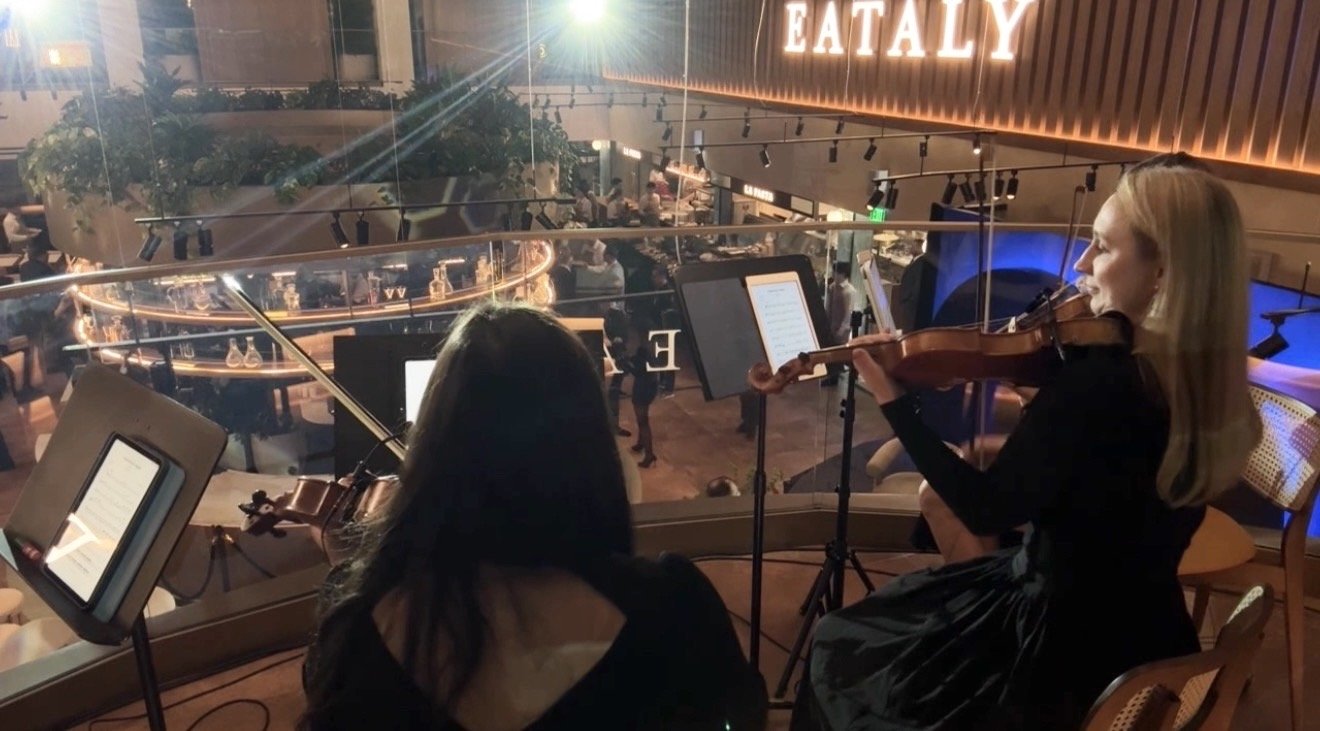
Recently, our string quartet performed Spring from The Four Seasons at Eataly in West Palm Beach’s CityPlace, and it gave us the perfect excuse to talk about one of our favorite things about this piece:
Vivaldi wasn’t simply writing beautiful music. He was telling a story.
Music that paints a picture
Published in 1725, Antonio Vivaldi’s The Four Seasons is now some of the most recognizable classical music in the world.
But there’s something surprisingly modern about it.
Each concerto represents a different season, and Vivaldi accompanied the music with poetry describing the scenes listeners were meant to imagine.
In Spring, we meet singing birds, flowing streams, gentle breezes—and eventually, a thunderstorm.
Vivaldi then translates those images into sound.
Listen closely to the opening movement and you’ll hear the famous joyful theme announcing the arrival of spring.
Then something wonderful happens.
The violins begin answering one another with quick, delicate figures.
Those are birds.
Different musical lines call back and forth across the ensemble, almost like birds answering one another from different branches.
And suddenly, a piece written three centuries ago doesn’t feel particularly old at all.
Then the weather changes
Because apparently unpredictable weather was ruining everyone’s outdoor plans long before Florida existed.
Partway through the movement, the peaceful spring landscape changes.
The music darkens. Rapid notes ripple through the strings. Thunder arrives.
And then, almost as quickly as the storm appeared, it passes—and the birds begin singing again.
This technique is known as programmatic music: instrumental music designed to depict a story, scene or idea.
Vivaldi was extraordinarily good at it.
Why we love performing Vivaldi as a string quartet
There is something particularly exciting about playing music in which every musician has a role in the storytelling.
One moment we’re accompanying.
The next we’re answering another musician across the quartet.
Then we’re building a storm together.
And unlike a recording, live chamber music allows those musical conversations to happen in real time. The musicians are constantly listening, responding and adjusting to one another.
There is no button to press.
No identical second take.
Every performance is slightly different because we’re actually having the conversation in front of you.
That is part of what makes live string music so compelling.
Classical music belongs in unexpected places
And perhaps that’s what we loved most about performing this music at Eataly.
Vivaldi doesn’t have to live exclusively inside a concert hall.
It can happen over dinner.
At a wedding.
Inside a bustling event.
In the middle of CityPlace.
A piece written in Venice more than 300 years ago can suddenly become part of a completely contemporary evening in West Palm Beach.
And when the first notes of Spring begin?
People still recognize it.
They still turn around.
They still listen.
Three hundred years later, Vivaldi’s birds are still singing.